Sunday, September 30, 2007

The things we do in the name of science (part one)

Welcome, one and all, to the re-debut of Infusions of Grandeur! It's great to finally be back. We've got a lot of great things planned for the blog, but we wanted to start back off with something big. We decided that, since we're expanding our horizons a bit, we should see how well one of our time-honored methods will translate to other subjects.

As our long-time readers know, all of the vodka infusions we make are based on bottom-shelf rotgut vodka that has been filtered five times through a water filter to make it drinkable. The process won't turn Vladimir into Grey Goose, but it does remove most of the impurities that make it wretched, transforming it into a decent mid-grade. If you are skeptical, you can read our original debut for a side-by-side comparison; or, for some of the technical details, read our study on vodka filtration.

But the question we intend to answer today is, how does this process work with liquors other than vodka? Bottom-shelf run, whiskey and other liquors have the same problem with impurities as bad vodka. However, they also have flavorings that are not present in vodka, the simplest of all liquors. Will these essential compounds survive the filtration? There is only one way to find out for certain.

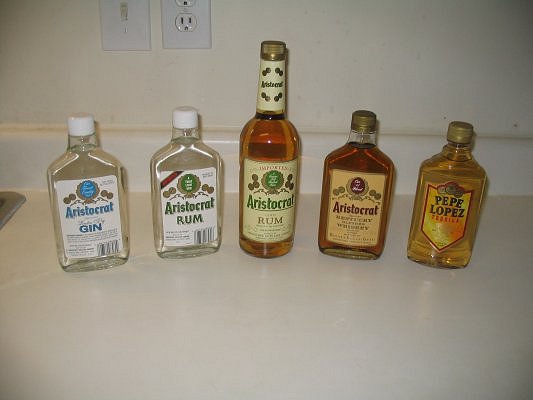
In this experiment, we will test the filtration of five different liquors: gin, light rum, gold rum, whiskey, and tequila.
RUN AWAY

Aristocrat was chosen for most of them because it's a fairly standard low-grade that most people are familiar with (at least, in our region). Pepe Lopez tequila was chosen for sentimental reasons, which will be explained in part two of this post.

Before filtering each liquor, a small amount was set aside to serve as a control. The testing of each liquor consisted of three samples: first, the original, unfiltered liquor; second, a middle-shelf equivalent (see below); and finally, the filtered liquor, to see how it compares to both.


Before we begin, there are a few caveats that we should discuss. First of all, the same filter was used throughout this experiment, which could taint the later portions. We attempted to reduce this risk in several ways. We are using a brand new filter, and ran plain tap water through it between each liquor to rinse it. We also used less of each liquor than our usual 750 mL bottle; as a rough estimate, we used about 300 mL of each. (We bought 375 mL bottles when possible, and set some of that aside for the control; no one seems to sell gold rum in 375 mL bottles, so we bought a fifth and used only a portion of it.)

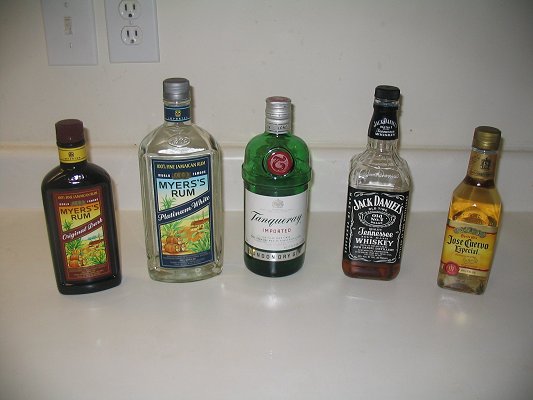
Second, I'm sure that Scottes will point out that the Myers's Rum we're using as a comparison to the Aristocrat Gold is a dark, not a gold rum. We didn't realize this until after we had completed an $80 liquor run, so we decided to leave it in place with this disclaimer. (The irony is not lost on us that, though we are evaluating a way for frugal drinkers to save money, this is our most expensive experiment ever.)
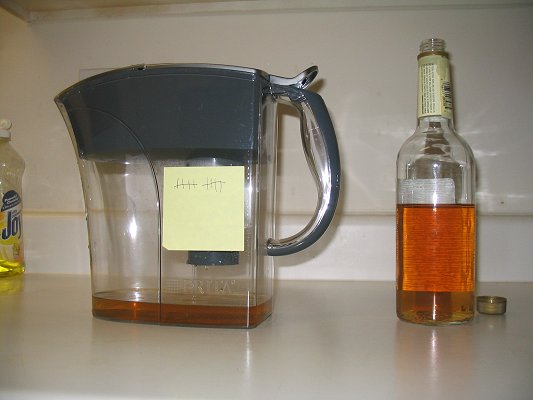
We read somewhere that Niels Bohr used tick marks on a Post-It Note as a highly scientific control.

We filtered the liquors in order of color, starting with the clear liquors. We began with gin, then moved on to light rum, gold rum, tequila, and finally whiskey. The first test of this experiment would be color of the liquors: if there was a loss in color due to the filtration, this would not bode well for the process.

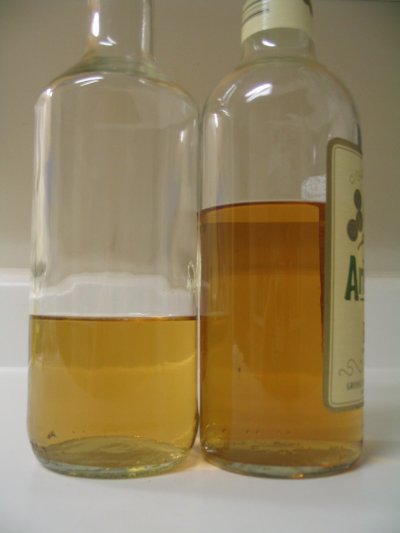
The gin and light rum went through first; there was, of course, no change in their color. When we began filtering the darker liquors, we began to observe their color closely. After five passes through the filter, the gold rum experienced a fairly obvious loss in color. Here you see the filtered rum on the left, and unfiltered on the right.


The tequila came next. Pepe Lopez has a fairly light color to begin with; by our rule, we should have filtered it before the gold rum in the first place. As such, the color change was subtle, but it definitely occurred.
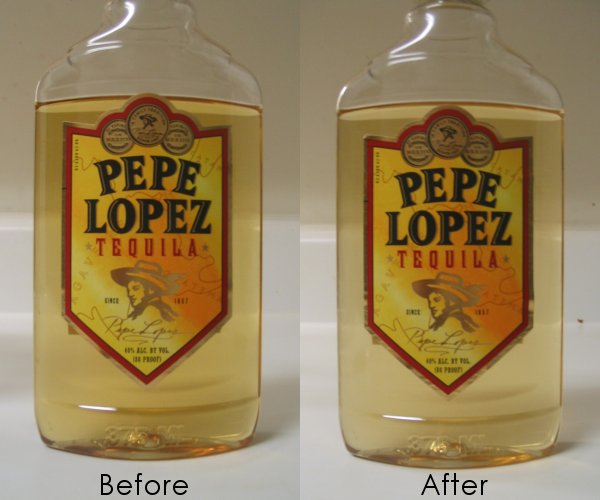


The change in color is more apparent when you compare them more closely. Here's a cropped section of each photo; the filtered tequila is on the right.



The Aristocrat whiskey, though much darker than the tequila, experienced a similarly subtle change in color.
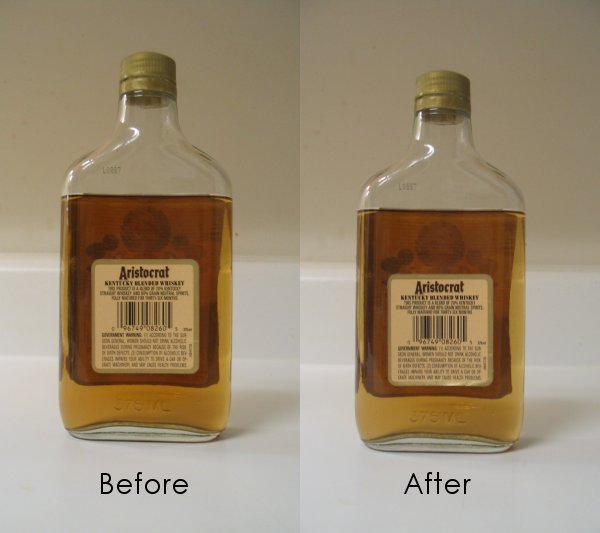



Do these changes in color represent a similar reduction in taste? With such bad liquors, would that really be a bad thing? Does a small loss of color mean a similarly subtle drop in taste, or is it evidence of a greater change? We will return on Wednesday with the tastings and results!

Friday, September 21, 2007

Greetings, new readers. We will be back very soon!

Wow! We're getting a deluge of traffic (by our standards) due to the reference in today's Home on the Strange comic. Thanks, Ferrett! The Ferrett has previously reviewed some of our infused vodkae (one, two, three), but we were not expecting this latest nod. (For our longtime readers, if you're not reading HOTS, what's taking you so long?)

We decided to take this opportunity to announce the date of our return: October 1. Be sure to check back then for our latest experiments and reports in the realm of alcohol and mad science.

Remember that you can subscribe to us using your favorite RSS reader. You can also follow us on our LiveJournal feed. See you soon!

Wednesday, September 5, 2007

Infusions of Grandeur on hiatus until late September

It's about time we made our hiatus official, after a month-long void in posting. Infusions of Grandeur is not dead, but we have been reevaluating what we want to do with it. A vodka infusion each week, while fun, is getting to be overly repetitive (and since we've cut back on our drinking, the infusions have outgrown their cabinet). So we're taking a break while we discuss the future of the blog.

We are going to continue in the same spirit (so to speak) as we always have, but we intend to expand our focus. There are many ways that our brand of mad science can be applied to alcoholic beverages, and much we can still learn and, in the process, teach. We will not stop doing vodka infusions, but we won't be starting a new one weekly; rather, we'll rotate between new infusions and other sorts of experiments and analyses.

Our plan is to re-launch Infusions of Grandeur sometime at the end of this month. We would aim for sooner, but I am soon to be offline and out of town for two weeks of National Guard training. In the meantime, we will be planning a variety of new subjects to discuss. Please join us in a few weeks when we return to the laboratory!

Thursday, August 2, 2007

A taste worth coming back to life for?

Egads! After our brief stint in the afterlife, the Mad Scienticians have resurrected! After collecting our pulverized remains, we funneled them into the Tevatron particle accelerator and carefully collided the whole mess together, reconstructing our bodies. Reuniting our spirits with our bodies was a much simpler matter; as anyone who's seen enough Frankenstein movies knows, all this really takes is a well-placed Tesla coil.

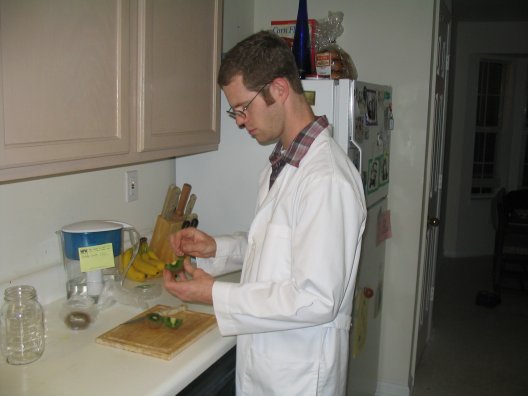
Since we live once again, it's time to start a new vodka infusion experiment! This week, we began a kiwifruit infusion, using the meat of two kiwifruit.


I cut the two fruits into thin slices, then peeled off the fuzzy skin. The skin is edible, but we suspect it would negatively affect the infusion.

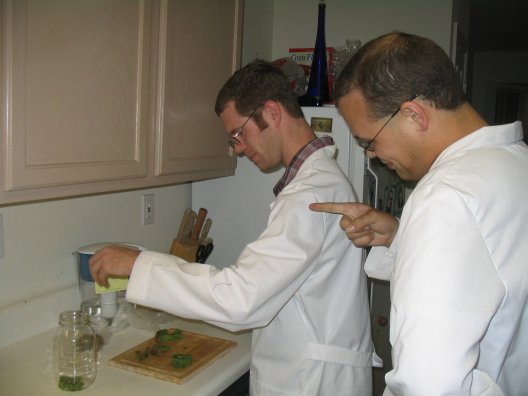
Once the kiwifruit were sliced, I placed them in a science jar under Wayland's close supervision, and added a fifth of our filtered vodka.


Though kiwifruit was made famous by New Zealand growers, it is originally a Chinese fruit. New Zealanders brought the plant home about a hundred years ago, calling them Chinese gooseberries. When they began exporting the fruits worldwide in the 1950s, the name was changed to "kiwifruit," after New Zealand's national bird.

We don't know how long to expect this infusion to take, but we will test it periodically until it is complete, as always.

Thursday, July 26, 2007

The Scienticians have died in a horrible Everclear explosion (also, lemon-lime results)

While attending Shore Leave, the Mad Scienticians bunked with the Vodka God. Naturally, the room was well stocked with various and sundry alcohols for the weekend, as we brought several of our vodka infusions, and Arthur made his world famous punch (the formula which inspired us to dabble in punchmaking ourselves). Unfortunately, such a high level of concentrated alconomics led to disaster, as our "bar" table reached critical mass and exploded. The Vodka God, being immortal, survived. Wayland and I once spent a few years as gods as well, but we have since retired; therefore, we were both killed painfully. This is why we haven't posted anything in two weeks.

It took us some time to determine how to access the internet from beyond the veil, but our persistence paid off. We finally acquired an authentic TopatoCo Steampunk Internet Ouija Board which is allowing our spirits to finally post. So, without further ado, we present the results of our Lemon-Lime Vodka experiment.


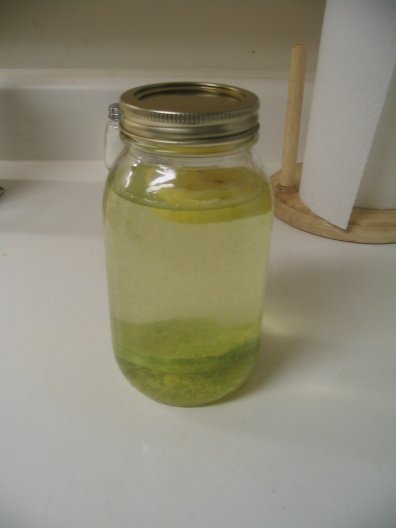
After six days of infusion, the vodka had attained a slightly green tinge, though not quite as much as our original lime vodka. Recall that our intent for this experiment was to create a light and sweet vodka reminiscent of Sprite or 7-Up. As such, we used the full zest of a lemon and a lime, but only two slices of each fruit. We also added two spoonfuls of sugar to sweeten it, with the intention to add more later if necessary.

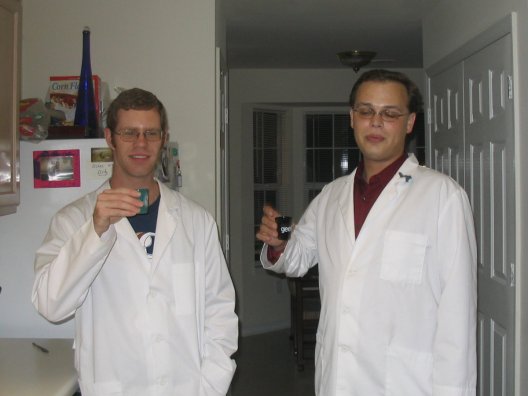
Using all of our strength, we were able to exert enough of a physical existence to pour two shots of vodka and drink them.


If a spirit drinks a spirit, does that make him a cannibal?

Using human blood on a mirror, I wrote that "due to the Shore Leave festivities (and our untimely deaths), we let this infusion run too long by at least a day, possibly two. The sourness of the fruits have overpowered the vodka, even though we used less of it. Perhaps if we strain it now and add more sugar to sweeten it more, it will be good."

Wayland's thoughts were hauntingly similar. "Too sour! Other than the overwhelming sourness, this is actually pretty smooth. The flavors are about right. If we could do something about the sour, we would be golden."

It is a little-known scientific fact that ectoplasm is mostly caramelized sucrose, so it was an easy task to add additional sugar to the vodka. We added the equivalent of two spoonfuls of sugar and tried it again. Unfortunately, it was not sufficient to salvage the experiment. The sourness remained, and Wayland commented that it may even be worse. (This is in line with what we learned in the Big Experiment, that sugar can intensify an infusion's natural flavors, making a good infusion great and a bad infusion worse.)

We will keep this vodka on hand for further experimentation, but ultimately, we are probably going to have to try this one again from scratch. Perhaps it would work better with zest only, and no "meat" of the fruit.

Thursday, July 12, 2007

The Un-Vodka (with Orlando Jones as the Infusions Guy)

With the Big Experiment now behind us, we have solid proof of the difference a dash of sugar can make in certain vodka infusions, particularly those involving fruit. However, we generally do not use enough sugar to really sweeten the drink, just enough to help along the infusion of the main ingredient. This week, we're trying something a little different.

A few months ago, we created a lime-infused vodka which met a mixed reception. Though the lime flavor was tasty, the vodka was quite sour. We felt that it needed to be mixed with something sweet to counteract the sourness, but every cocktail we attempted to use it in failed to meet the task.

This week, we're going to try to work around the shortcomings of that experiment and attempt a tried-and-true flavor combination: lemon-lime. We are hoping to reduce the sourness and increase the sweetness, to create something that resembles Sprite or 7-Up in flavor. If successful, perhaps this would be good with a bit of soda water, to add carbonation? We shall see.

In this experiment, we are using the zest of one lime and one lemon, and two thin slices of each. We are only using two slices of each in the hope that they will impart the flavor of their juices without making it overly sour. (Recall that the previous lime infusion used two entire limes.) In addition, we are adding enough sugar to sweeten the vodka.

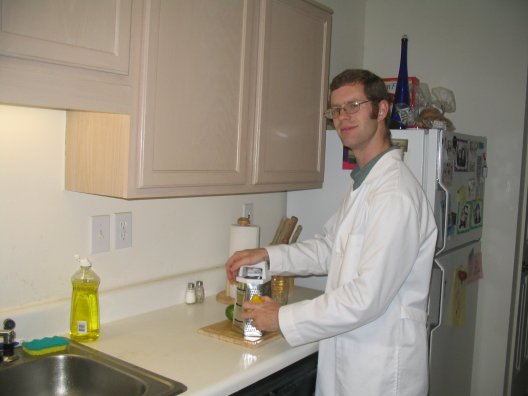
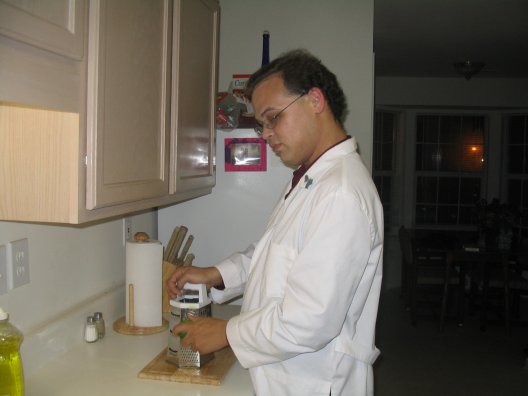
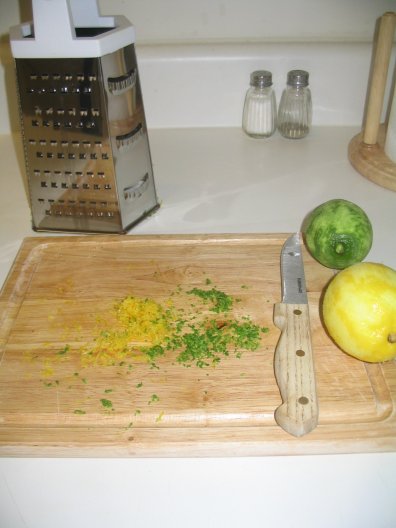
We began by zesting the fruits, using our cheese grater as we learned to do during our last lime experiment.


The lime yielded slightly less zest than the lemon, due to its thinner skin and smaller size.


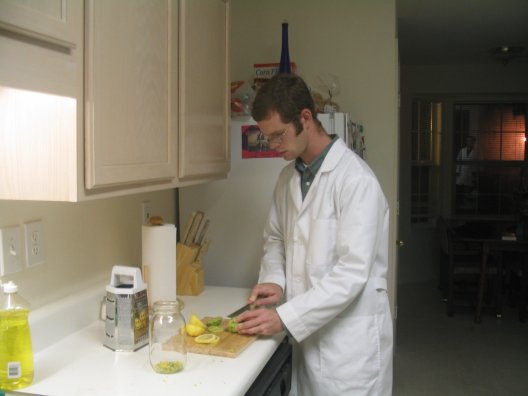
Once we had carefully scooped the zest into a science jar, I cut two thin slices from the midsection of each fruit.


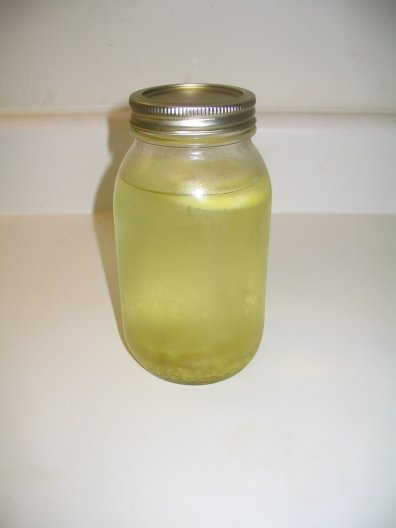
Here is the product as it appeared once the infusion was underway. Interestingly, the lime slices sank to the bottom, while the lemon slices floated.


Once the fruit ingredients were added to the vodka, we added two spoonfuls of sugar. We suspect it will need more sugar than that to get the effect we're looking for, but we can always add more later. We will check the progress of this experiment after about five days, and decide whether to add more sugar, and how much.

Since we've been thinking about lemons and limes, I have also decided to try my hand at some homemade lemonade. Though I primarily made it as an alternative to drinking soda at home (an odd motivation when we're making a soda-inspired infusion), it may also mix well with this vodka, or perhaps our orange vodka.

When researching how to make authentic lemonade, I came across this recipe, which suggests beginning with simple syrup (rather than simply mixing water, sugar and lemon juice). I picked up a lemon squeezing apparatus and a bunch of lemons, and the first batch turned out pretty good.


Sadly, this cheap piece of crap broke on the third lemon, and I had to squeeze the rest by hand (which I think actually yielded more juice than the squeezer). I hope Wayland enjoyed playing with it while he had the chance.

Wednesday, July 11, 2007

More results: black tea and lemon vodka

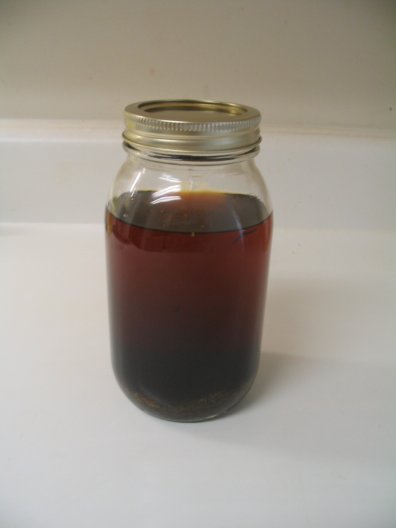
Last week's infusion experiment, black tea and lemon vodka, infused for about a day. Due to time constraints, we bottled the infusion taste untested, and waited until the next day before conducting a true test. The loose tea cold-steeped the vodka to a dark brown color, as we expected. Before bottling, the infusion looked like this:


We strained the tea leaves and lemon zest out of the vodka through cheesecloth while bottling it.

It should be noted that neither of the Mad Scienticians are avid tea drinkers. We generally only drink it when we are sick, or when a rare mood strikes us. Therefore, we are not qualified to review the quality of the tea flavor in its own right.

This testing occurred on the same night as the Big Experiment testing, so as you might tell, we were slightly buzzed by this point. However, we do not believe it was enough to adversely affect our analysis.


I felt that the vodka had "a strong tea flavor all the way through, though it still has a significant vodka flavor component, and a bit of a burn on the back end. The lemon flavor is barely noticeable in its own right, but it is present as a part of the tea flavor, which is as it should be. It's not something I would drink often on its own, but I bet it would taste great with our honey vodka."

Wayland's thoughts ran along similar lines. "This reminds me of being sick, though not in a bad way. Generally, when I'm sick, I turn to tea. The problem is, I usually add copious amounts of sugar or honey to my tea. I feel like this vodka needs a sweetness that isn't there. There is a mild vodka burn to this, but it is hardly noticeable. Other than the lack of sweetness, this is excellent."


Subsequently, we decided to put our mutual theory to the test, by combining this with honey vodka.

Black Tea/Honey Shot

Shake with ice and pour into a shot glass:
½ oz. Mad Scientician™ Black Tea and Lemon vodka
½ oz. Mad Scientician™ Honey vodka

This is exactly what we felt was missing when we tasted the black tea. The sweetness supplements the taste of the tea vodka, and cancels out its back-end burn. Wayland felt that it could use a higher tea ratio, possibly two-thirds tea to one-third honey; I thought it was fine as it is, though the higher ratio may be preferred by tea lovers.

Brendan's score: 3.5 flasks out of 5
Wayland's score: 3.5 flasks out of 5
Overall score: